


By Matt Hall, Founder, Scepter Marketing
Yes, Scepter Marketing provides digital marketing in Port Huron, built for businesses that sell to the whole region and not only the city. Port Huron is the largest city in the Thumb and a center of industry and trade for the area around it. So a fabrication shop, a heating contractor or a waterfront rental here can draw buyers from far beyond the city limits. If your listing and your site only ever say “Port Huron,” a lot of those searchers end up calling someone else.
Our answer is one team that runs your Google Business Profile, your local SEO, your site fixes and any ads, with every call tracked back to where it started. Each month you get a plain answer on which part of the Thumb is calling and what brought them in.
Scepter Marketing handles digital marketing for Port Huron companies, and we grade it on phone calls and booked work, not clicks. The first thing we usually check is reach: a listing that looks strong near downtown can thin out a few miles away, and plenty of Thumb buyers search from farther out than that.
A furnace quits in a farmhouse outside Port Huron. The owner grabs a phone, taps a contractor in Google Maps, skims the website, checks the reviews, and only then dials. That's three stops and three chances to lose them. If one vendor holds your listing, another built the site, and nobody owns reviews, one of those stops breaks. A single plan keeps every stop pulling in the same direction.
Your listing and pages are set up for the region you actually serve, so buyers across the Thumb see you too.
The Maps listing, the website and the reviews describe the same services and the same area, so a buyer never second-guesses who you are.
Each call is tagged by where it began, so budget moves toward what books work in the Blue Water Area.
Google Maps ranks a business partly on its distance from the searcher. For a Port Huron company, that creates a specific problem. The city is the largest in the Thumb, and it works as a center of industry and trade for the region, so plenty of the people who need you aren't standing downtown when they search. A listing with thin categories, no service area, and a site that only ever names the city can look strong on a phone downtown and fade a short drive out. Ads can't fix that alone. Neither can a new website. The listing needs the right categories and service areas. The site needs pages that describe the work and the region it covers. Reviews need to keep coming in and mention the jobs. When one team handles all three, they get fixed in the right order and measured the same way, instead of three vendors each blaming the others.
A boosted Facebook post or a single freelancer on ads can produce a few calls. What it can't do is fix a Maps listing that stops showing up across the Thumb, rewrite service pages, or ask last month's customers for reviews. Those gaps stay open while the money goes out. And without call tracking, the owner has no way to tell whether the ads worked or the phone was just busy that week. The spend keeps going because nobody can prove it shouldn't.
A single plan costs more than a boost. It also covers the parts a boost skips. We'd fix the listing and the site before turning on paid search, so the ad money lands on a page that can close. Then every call carries a source, and the monthly read tells you which piece earned it. If ads aren't pulling their weight in your market, we'll say so and move that budget to the listing or the pages instead. That decision is only possible because one team sees everything.
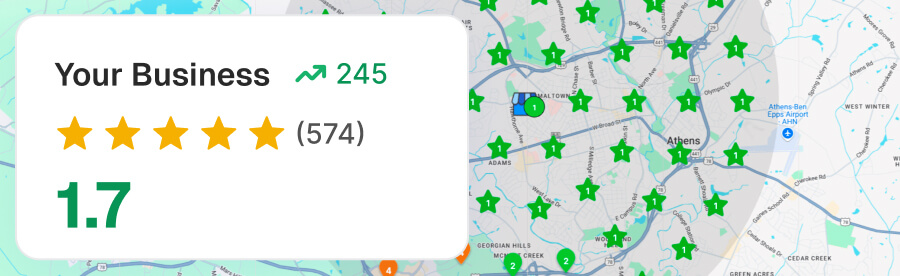
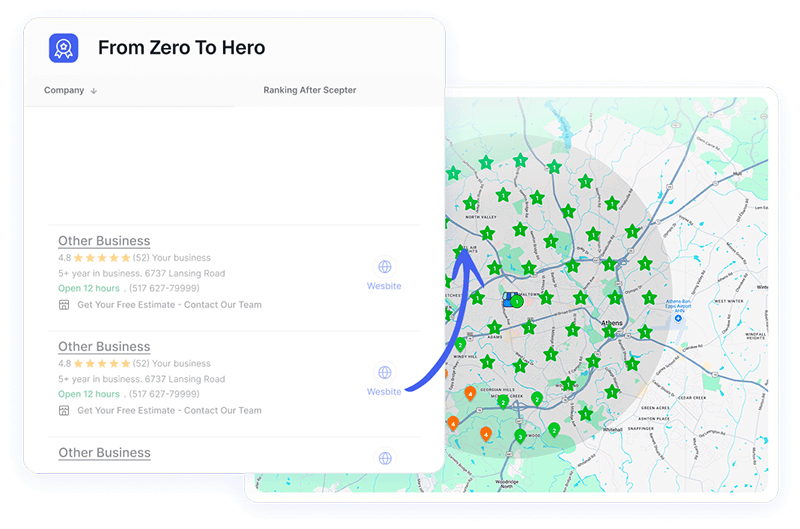
Start with measurement. We'd run a Google Maps ranking grid around your address: a set of points, each one a search run from that spot, showing where you place. In Port Huron the Black River divides the city in half, so a grid makes it clear whether you show up on both sides of it and out into the wider Blue Water Area. Then the work follows the gaps: listing categories and service areas, pages for the services and territory you cover, and reviews that describe real jobs. Ads come in where a gap is slow to close on its own. Because the same grid gets run again later, you can see whether your reach moved, instead of taking our word for it.

No agency fee, but the hours come out of your evenings. And with no call tracking, nobody can say whether a single lead came from outside downtown.

One person handles ads or posts, and the listing, site and reviews sit untouched. Buyers out in the Thumb may still miss you.
Recommended

Listing, local SEO, site work, reviews and ads under one team, aimed at the region you serve, with every call traced to its source.
Port Huron has no Scepter office, and this page won't suggest one. Our team is in East Lansing, Michigan, answering on a normal U.S. workday. In place of a local storefront, you get three things we can back up: ranking grids published in the open, a single team handling every channel, and an audit engine we built ourselves.
O1

Every recommendation comes with three things: what's live, why it suits a company selling across the Thumb, and the number that would prove it. When a spend isn't earning its keep, we tell you in the same plain terms.
O2

Everyone working your account is in Michigan and keeps a U.S. workday. When you email a question, the reply comes from a person who already knows your listing and your site.
O3

Before you sign anything, look at the Google Maps ranking grids we post for profiles under our care. Then hold any other agency to that standard. One that has no grids to show owes you an explanation.
O4

Your listing, your pages, your reviews and any ad spend sit with one team. When a grid shows a weak spot out in the Thumb, nobody has to coordinate three vendors to fix it. We make the change and run the grid again.
O1

Plenty of owners begin with just the Google listing and a handful of service pages. That's a sensible start. Ads or articles added later plug into the tracking already in place, so month one and month ten compare cleanly.
“I've worked in this field since about 2009. A report you can't check doesn't tell you much, so we publish our grids and trace calls back to where they started.”

Founder at Scepter Marketing
For a Port Huron business we'd move through six steps. To show how, imagine a heating and cooling company covering homes across the Thumb (an example, not a client). We audit, set up tracking and repair the foundation, build Maps and local SEO reach (adding paid search only if it earns its cost), adjust from the grids, report on calls, then scale what works. Starting with a single step is fine too.

For that contractor, the audit checks the Google listing's categories and service areas, reads the site's service pages, checks how recent the reviews are, and runs a grid across the region it serves.

The site checks run through the audit engine we built and use on prospects. What comes back is a short list in priority order. For our example contractor, it might read: listing categories too narrow, no page for furnace repair, no new reviews in months, visible near downtown and thin elsewhere in the Thumb. Each item names the fix.
01
02

Before any new spend, calls get tracking numbers and forms get source tags. Otherwise nobody can say later whether a job came from Maps, the site or an ad.

This is also where the foundation gets fixed. The listing's categories and service areas get corrected. Missing service pages get written. Broken links and slow pages on the site get repaired. For the contractor in our example, that means the business describes the same services and the same territory everywhere a buyer might check. None of this is exciting, and it's easy to skip. Ads and new content work better on top of it.

Once tracking and the site are sound, we push the Maps listing and local SEO out toward the rest of the Thumb. That means a page per service and per area covered, plus a routine that asks happy customers for a review once the work wraps up.

Paid search fits in alongside this step, and it's optional. Google Ads go live the day they're approved, though you pay for every click. For the heating and cooling example, we'd point ads at urgent searches like a no-heat repair and at the parts of the Thumb where the grid shows the listing thin, while organic reach catches up. When ads can't bring calls at a cost you accept, we scale them back.
03
04

We rerun the grid and read the call log together. If a channel isn't producing, its budget moves. If a part of the region stays weak, that's where the next page goes.

Consistency matters here more than cleverness. When an agency partner's SEO person left, they handed us 7 active SEO clients, some on a custom CMS, and delivery kept going without a gap. Once things settled, their roster grew to 30 active accounts (it's written up in our white-label SEO case study). That's a process story, not a local one. It's the same measure-adjust-measure routine we'd run for a Port Huron business.

The monthly report lists calls and forms per channel, what the grids show, total spend, and the change we're testing next. Five minutes, start to finish.

For the contractor in our example, a useful report answers the questions an owner actually asks. Did calls from outside the city go up or down? Which service pages brought people in? Did the ads earn their cost? Is the listing reaching farther than it did? Rankings show up in the report, but they sit below the calls. A ranking that never rings the phone isn't the point.
05
06

When a piece is clearly producing calls, it gets more budget, and the plan reaches into the next part of the Thumb you want work from, on the same tracking so results stay comparable.
Growth for a Thumb business usually means geography. Once Port Huron itself looks solid, the next step is the part of the region where the grid stays thin: a page for that area, listing updates, review requests from customers there, and sometimes ads to cover the gap. Then a fresh grid shows whether reach moved. Nothing earlier gets thrown out.
Each item below says what it fixes and where you'd see the result. The order follows the problem this page keeps coming back to: reach across the Thumb. That's why local SEO leads the list. If one of these is already handled well for your business, we leave it alone and scope around it.
What we do
We tune your service pages and listing signals for the searches people run when they need the work, and we build pages for the parts of the Thumb you serve, not only Port Huron.
Why it works
It fixes a common reach problem for regional businesses: a site that only names the home city. Google needs clear text about where you work before it's likely to show you to searchers farther from your address.
Where it shows up
In Search Console, look for impressions on service terms tied to the areas you cover. In the grid, watch the points beyond downtown. In the call log, check how many calls come from outside the city.
What we do
We set up search ads on urgent service terms and the parts of the region where your Maps reach is thin, each ad pointed at a page built to get the call.
Why it works
Ads fix a timing problem. Organic reach across the Thumb builds slowly, and ads can show you to a searcher the day they're switched on. They also cover the places your listing doesn't reach yet. The trade-off is cost: you pay for each click, so they get watched closely.
Where it shows up
Look for it in the call log, where ad calls carry their own tracking number, and in the cost-per-call line on your monthly report.
What we do
We clean up your listing's categories, hours, service list and service areas, add photos from actual jobs, post updates regularly, and build a habit of asking happy customers for a review when the work wraps up.
Why it works
It fixes the listing that looks abandoned. A buyer from elsewhere in the Thumb who has never heard of you leans on the profile and its reviews to decide. Recent reviews mentioning the service they need give that stranger a reason to call you over the next name on the list.
Where it shows up
Look in the profile's own numbers: calls, direction requests and website clicks, plus how far out the grid shows you appearing.
What we do
We write service pages for each kind of job you want more of, plus area pages for the parts of the Thumb you actually work in, each with a clear way to reach you.
Why it works
It fixes thin pages. One “services” page listing ten things tells Google and AI assistants very little. Separate pages that explain one service, how the job goes, and where you do it give a buyer and a search engine something to work with.
Where it shows up
Watch for new pages earning impressions in Search Console, visitors landing on them from service searches, and calls or forms that start on those pages instead of the homepage.
What we do
Each channel gets its own tracking number, forms carry a source tag, and both feed into your analytics and ad accounts, so a call from Maps never gets counted as an ad call.
Why it works
It ends the guesswork. Untracked, a strong month gets credited to whatever you paid for most recently. Tracked, you can see whether the effort aimed beyond city limits turns into phone calls or only visits.
Where it shows up
You'll see it as a source column next to every lead in your monthly report, and as cost per call for each channel, side by side, so weak spending is easy to spot.
What we do
Every month brings a one-page summary: which channel produced which calls and forms, fresh grid snapshots, what you spent, and the next adjustment we plan to make.
Why it works
It fixes the report nobody reads. If you can't follow it in five minutes, it won't help you decide anything about your budget.
Where it shows up
In your inbox every month, and on a call whenever you want to walk through it with the person running your account.
Port Huron's version of the problem is reach. As the largest city in the Thumb and a center of industry and trade for the region, it draws business from a wide area, and a company set up only for the city can miss many of those buyers.

Calls from across the Thumb, counted.

Recent reviews, consistent details.

Listing, pages, reviews and ads fixed in order.
The search data behind this page is small, and we'd rather say so. There's no Google Ads search volume on record for “port huron mi digital marketing.” Over six months in Search Console, “marketing company port huron” earned 2 impressions at an average position of 9.5, and “marketing port huron” earned 1, with no clicks on either. A phrase that thin isn't something to build a business on. For a Port Huron company, we'd build around the services you sell and the territory you cover: accurate listing categories and service areas, a page per service and area, fresh reviews, and a grid that shows how far your reach extends before and after.
Picture a homeowner in the Thumb with a basement taking on water, typing into ChatGPT: “who's a plumber near Port Huron that'll come out on a Sunday?” Google now places AI answers over some results too. Assistants like these piece together what they can confirm: the same business name, address and phone across listings, reviews that describe actual jobs, and site pages written as plain answers. When those sources disagree, the business is harder for them to recommend.
No one can promise that an assistant will name you, and we won't try. We measure instead. The AI Visibility Check costs nothing and runs on the audit engine we built ourselves. It shows what Google's AI answer and tools like ChatGPT currently pick up about your company, and where your name, address or phone number don't match.
The proof we publish sits on our local SEO results page: 99 Maps ranking grids drawn from 30 Google Business Profiles we manage. We're not claiming any of them is a Port Huron business. They show the method, the same grid we'd use to check whether a Thumb business is seen past its own part of town.


Problem
An owner can't judge Maps visibility from one phone. Rankings change from point to point around an address, so a search from the shop says little about the wider area.
The Plan
We run grids for the profiles we manage, checking placement at every point, then work on the listing where it's weak.
The Plan
Each published grid has the business placing top 3 on 60% or more of its points. In 28 grids it's green everywhere. It's a selection, not every client.


Problem
An agency partner's SEO person left, and 7 active clients still needed their work done, a few on a custom CMS. Delivery couldn't stall.
The Plan
We picked up all of it without a break in delivery, kept the routine consistent, and the partner grew from 7 active accounts to 30 once things steadied.
The Plan
The full story is written up in our white-label SEO case study. Port Huron falls under our wider Michigan digital marketing program, which also covers nearby towns such as Leonard, about 37 miles away. If your traffic is fine and calls aren't, our Michigan SEO service concentrates on the pages and the listing that turn a visit into a call.


Problem
The pattern we look for with a regional business: good placement close to the address, weaker points farther out, and nobody measuring the gap between the two.
The Plan
We run a grid before touching anything, make the listing, page and review changes, then run the same grid again so any movement shows point by point.
The Plan
That before-and-after grid is how we'd judge reach for a business selling across the Thumb, and it's the method behind our published grids.
This fits a Port Huron business that earns work from across the Blue Water Area, not only its own street, and wants one team on the listing, pages, reviews and ads. The clearest fits are trades, shops that supply or service the area's industry, and tourism businesses marketing the Thumb Coast. If all you need is a repaired website or a cleaned-up listing, we'll scope only that.

Why this matters. Each of these businesses sells past the city line, so reach is the problem worth paying to fix. A plan built around Maps, regional pages and reviews suits them better than one built around a single ad campaign.

Why this matters. Measuring reach and calls is the whole method here. Without tracking, we can't show you whether a page for another part of the Thumb earned anything. And if your customers all live within walking distance, a regional plan is money you don't need to spend. We'd rather tell you that on the first call.
Each answer below starts with the short version, then the detail that matters for a business selling across the Thumb. When the honest answer is “it depends,” we name what it depends on. Anything missing, ask the people who'd actually do the work.
Digital marketing for a Port Huron business has no single price, because the size of the job varies a lot. A listing cleanup is small. Listing, pages, reviews, ads and reporting together make a bigger monthly job. Ad spend goes to Google and sits apart from what you'd pay us to manage it. A site that needs repair costs more to build on than one in good shape. Reach changes the work too: selling across the Thumb takes more pages and more grid tracking than serving a few blocks. The free AI Visibility Check, plus a look at your listing and site, shows which of these apply to you, and the quote comes from that, so you're not paying for pieces you don't need.
There's no honest fixed timeline, so we won't name one. What speeds things up or slows them down is fairly predictable. Ads can start showing the day they go live, but each click costs money. Business Profile fixes, like categories and service areas, usually register sooner than new pages. Service and area pages for the wider Thumb take longer, since Google has to find them and weigh them against other results. A site with technical problems slows everything down. For a Port Huron business after regional reach, the grid is the honest clock: run it first, run it again after the changes, and compare the two.
The 70/20/10 rule is a budget split: roughly 70% on what already works, 20% on things showing promise, and 10% on tests. It's a useful habit, not a law. For a Port Huron business whose problem is reach across the Thumb, the 70 belongs with whatever already brings calls, which might be the listing and a few core service pages. The 20 could fund pages and ads for parts of the region where the grid runs thin. The 10 can test something new, such as a page aimed at visitors to the Thumb Coast. Call tracking decides when money moves between buckets, not the calendar.
It's worth it when the agency fixes a problem you don't have time to fix yourself, and proves with tracking whether it worked. For a small business here, the problem we'd look at first is reach. A shop can do fine near downtown on word of mouth and still miss the wider Blue Water Area, because its listing, pages and reviews don't tell Google where else it works. Fixing that means steady hours on several fronts at once, which is where a small team runs out of time. It may not be worth it if your work comes mostly from referrals, or if you need only one repair. In that case, hire for that one thing. Whoever you talk to, ask for ranking grids and ask who does the work.
It means every call and form gets labeled with the channel that produced it, so you know which spending earns work. In practice, your Maps listing gets one tracking number, ads get another, the website gets a third, and forms carry a hidden source tag. Say a Port Huron heating contractor gets a call from the Business Profile on Monday and a form from an area page on Wednesday. Labeled, those show the listing working and the regional page earning its keep. Unlabeled, they're two leads and a guess. After a few months of this, you can see whether calls from across the Thumb are growing and which channel earns the next dollar.
Make the next step obvious on every page, and send visitors to pages that match what they searched. For a business serving the wider Thumb, that second part matters. Someone from elsewhere in the region who lands on a page that only mentions Port Huron may wonder whether you come out to them. Area pages that say plainly where you work, and service pages that name the job, answer that before they leave. Then the basics: a tap-to-call number at the top on phones, a short form, your hours, and recent reviews near the button. Call tracking shows which pages produce calls, so we fix the weak ones instead of redesigning the whole site.
For a Port Huron business selling to the wider Thumb, the pairing we'd start with is the Maps listing plus pages written for the region. Reviews hold both up. Ads cover specific gaps, nothing more. The free AI Visibility Check is a quick way to see where you stand before choosing.
If one piece is all you're after, there's a page for Port Huron SEO and another for web design for Port Huron businesses.

The listing gets you seen near your address. Pages for the services you sell and the Thumb communities you serve give Google a reason to show you farther out.

Search ads can cover the parts of the region your listing doesn't reach yet. Once the grid fills in there, that budget can shrink.

A buyer elsewhere in the Thumb doesn't know you. Recent reviews describing the job are often what they read before calling, and they help your listing too.
Too Busy to Dive In?Want a read before any conversation? The AI Visibility Check is free. Enter your website and you'll get a picture of what Google and the chat tools pick up about you right now, which listings carry conflicting details, and the single fix we'd start on for a company selling across the Thumb.