


By Matt Hall, Founder, Scepter Marketing
Yes, Scepter Marketing provides Hartland MI digital marketing, and we take on this work for Hartland companies whose customers mostly live outside town. The 2020 census counted 777 people in Hartland, so a remodeler or HVAC company here won't fill its calendar locally. Our job is getting you found by searchers in the surrounding towns and turning those searches into calls.
US-23 forms the western edge of the community, and a lot of the people who'd hire you live in the towns around Hartland or reach it by that highway. We put your Google Business Profile, site, rankings and any ads under one plan, then test whether the listing appears in those towns at all. Each month you see the calls that came in and where they started.
Yes, Scepter Marketing does digital marketing for Hartland businesses, and we judge it by calls. The gap we'd check first: a Maps listing that shows near your own address and fades a few miles out, right where most of your customers live.
A homeowner a few towns over searches for a service, sees three businesses on the map, taps one, scrolls its site, and reads reviews before dialing. That's one decision passing through three places. When your listing, website and reviews are handled by different people, nobody notices the weak spot, and the caller moves on. A single plan keeps all three consistent.
We work to get your listing and pages in front of people searching from the towns around Hartland, not only next door.
When a map tap lands on your site, the page answers what they came for: the service, the area served, how to call.
A stranger in the next town has never heard of you. Recent reviews describing real jobs give them a reason to dial.
Follow one search all the way through. A homeowner a few towns over types “roofer” into Google and gets three names on the map. Your address says Hartland, a community of 777 people, so Google has to be convinced you're relevant to someone who isn't close by. That rides on your categories, your service areas and how plainly your site says where you work. Now say one person set up the listing, someone else built the website years back, and nobody asks happy customers for a review. The searcher might spot you, tap through to a page that never names their town, see a few stale reviews, and call the next business instead. No single vendor failed. Nobody owned the whole trip, though. We take the listing, the site copy and the review asks as one job, and we test every handoff where a caller could slip away.
Going solo, or buying one channel, can carry a new Hartland shop for a while. A complete listing and a few reviews may bring calls from neighbors. Growth stalls once you need customers from the next towns over. Ads go dark when the budget runs out. A website with nothing feeding it gets little traffic. And a neglected listing slips behind competitors who post updates, answer questions and gather reviews every week.
Run together, each piece covers another's weak spot. Ads can bring in calls from a town where the listing doesn't reach yet. The listing slowly earns the reach you'd otherwise rent from ads. Service pages give both somewhere useful to land, and reviews make the stranger comfortable enough to dial. It costs more than the solo route. In exchange you can see which piece earned each call, so money moves toward what's working instead of staying wherever it started.
Hartland is the main community in Hartland Township, and the census place itself is small. Steady leads for a business here usually mean a reliable share of calls from outside it: other parts of the township, other Livingston County towns, and drivers on US-23. That only holds up when three things are true. Google trusts your listing for searches started miles from your door. Your site has a clear page for each job you want, written so a stranger can tell you serve their area. And your reviews keep arriving, because a listing with nothing new in months looks neglected. We build those three on purpose, then measure the calls they bring so next month's budget follows evidence.

Free except your evenings. Most owners run out of time before the listing, site and reviews get regular attention, and nothing tells you what's paying off.

Good work on one piece can still lose the caller somewhere else, and with no tracking you won't know where the drop happened.
Recommended

Listing, site, reviews and ads run as one job, aimed at callers from Hartland and the towns around it, and measured monthly.
Hartland owners can vet us before any phone call. The Maps grids we run for profiles we manage are posted publicly, so you can judge the work first. Our crew is Michigan-based and answers during normal U.S. weekday hours from the East Lansing office. Your listing, pages, ads and reviews stay with one group, so nothing falls between vendors.
O1

We'll explain a ranking grid the way you'd explain a job estimate: what we tested, what it showed, what we'd change. If a recommendation can't be said in a sentence or two, we haven't thought it through enough yet.
O2

Our team is in Michigan and works U.S. business hours. You reach the people doing the work on your account while your own shop is open, not a ticket queue.
O3

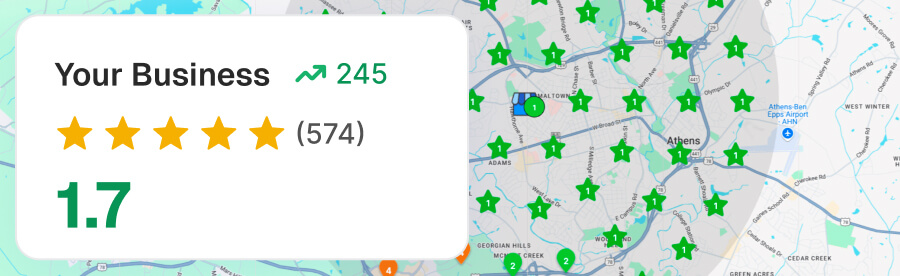
Count calls, not charts. The proof we point to is checkable: 99 grids built for 30 profiles we manage, each showing top-three placement across at least 60% of the points tested.
O4

One team runs every channel. If the listing slips in a neighboring town and the ads need to cover the gap, the same people see both problems and handle them together, without a three-way email thread.
O1

Starting with only the Business Profile and reviews is fine. Later, if you want ads in a town the listing can't reach or a site rebuild, it gets added to the plan and tracking you already have.
“I've been doing this since about 2009. We hold our own site to the same audit we run for anyone else, and we fix what it turns up, including the dull stuff.”

Founder at Scepter Marketing
We'd take a Hartland business through these steps in order. Picture a heating and cooling company whose map listing ranks well on its own street but fades a few towns away, where most of its customers live. Under each step is what we'd check for a company like that. Starting with a single step is fine. Later steps build on earlier ones.

We run a ranking grid around the address, then repeat key searches as if typed from surrounding towns, and read the profile, site and reviews the way a stranger would.

For our example company, the audit might show strong grid results close in and weak points further out, categories missing a main service, and no page on the site for the towns it actually serves. Those become the first list. None of it is guesswork, and you see the grid yourself.
01
02

Before changing anything, we put tracked numbers on the listing, site and any ads, and log which page each form came from, so later changes have a baseline to compare against.

Tracking comes first because calls from outside town are the hardest to trace. A homeowner might find you in Maps on a phone, look at your site that evening on a laptop, and call the next morning. We tag each entry point on its own: the call button on the profile, the number on the website, the contact form, and any ad. Each call then shows which door it came through, which is how you'll judge whether effort aimed at a given town is earning anything.

Step two is groundwork. We correct the profile's main and secondary categories, list the towns you cover, make your business name, address and number match on every directory, and give each service its own page stating which towns along US-23 it reaches.

For the example company, that likely means splitting one thin services page into separate pages by job, adding pages for the towns where it wants more work, and fixing technical problems that keep Google from reading the site well. We do the same kind of cleanup on our own site. Reviews get a simple ask after finished jobs, with no script telling customers what to say.
03
04

Paid search is optional. If the grid shows a town you need where the listing doesn't appear, ads can cover that town for the searches that turn into jobs while the organic work continues.

We keep ad campaigns narrow on purpose. Broad terms across a spread-out area pull clicks from people too far away or looking for something else, and you pay for each one. Tight geography, specific service terms and a tracked number on each ad keep spending honest. If an ad isn't producing calls we can count, we'd rather shut it off than defend it.

Each month's report starts with calls and forms, broken out by entry point and, where we can tell, by town. Grid results come second, as a measure of reach rather than the goal.

Each report covers what we changed, what improved, what stayed flat, and the next move. When a target town isn't sending calls, that's the first thing you read, not something buried at the end. We keep it brief deliberately, so you can finish it in a parking lot between appointments and know whether your budget is earning its keep.
05
06

Once one town is sending calls for a price that works for you, we carry the same method into the next town you care about, on the tracking already wired in, so each expansion starts with real numbers.
Say the listing is holding up for searches around Hartland and the next goal is more jobs from Holly (about 11 miles away) or Davisburg (about 12). We don't start over. The profile's service areas, a page aimed at that town, and a tracked ad if needed get extended, and the reports show whether the new town earns its keep.
Over the last six months, “seo hartland mi” and “hartland marketing” each brought this page 3 impressions in Google, with no clicks. Those are tiny numbers, so we don't build a plan around them. Each item below names the problem it fixes and why it matters for a Hartland business.
What we do
We tune your site's service pages, titles and internal links so they can rank for searches started in the surrounding towns, not only for people already inside Hartland.
Why it works
A small community can't supply most of the work for a busy trade. Organic results depend less on distance than the map pack does, so strong pages give you a shot at customers whose searches start well beyond your address.
Where it shows up
In Search Console, as impressions and clicks on service terms paired with nearby town names, and in tracked calls from the website number. Those are the figures we put in front of you each month.
What we do
We build small, tightly targeted Google Ads campaigns for the towns and services where your listing and pages aren't reaching searchers yet, each pointed at a call.
Why it works
Ads can run as soon as they're approved and funded, with no wait on rankings. That makes them a sensible patch for a town the grid says you're missing. They also stop the day the budget stops, so we treat them as a supplement, not the whole plan.
Where it shows up
Tracked calls per campaign and per town, cost per call beside it, and a plain note when a campaign isn't worth keeping.
What we do
Every field on the Google listing gets filled in: primary category, services, the towns you cover, hours, real job photos and a questions and answers section. After each completed job, your crew texts the customer a short review link, and we answer every review in a tone that sounds like you.
Why it works
The map pack shows three names. A thin profile gives Google little reason to show a Hartland address to someone searching from a few towns away, and a page of old reviews gives that searcher little reason to call. Complete details and a steady trickle of new reviews work on both problems.
Where it shows up
Ranking grids showing where in the area you appear, plus the profile's own counts of calls, website clicks and direction requests.
What we do
We write pages around the jobs you want more of and the questions people ask before hiring, in plain language that makes clear which towns you'll travel to.
Why it works
Someone in the next town needs more convincing than a neighbor. A page that answers their real questions (what affects price, how the job works, whether you come out their way) gives Google something to rank and the reader a reason to call.
Where it shows up
Search Console impressions on those page topics, visits from surrounding towns in analytics, and the form fills and calls tracked back to each page we wrote.
What we do
We assign tracked numbers to the profile, website and ads, log form submissions with their source page, and connect it all to one dashboard, so every lead carries a label.
Why it works
Without labels, a call from someone three towns over looks the same as one from across the street. With them, you can tell whether out-of-town work is coming from the map, the site or an ad.
Where it shows up
A monthly tally of calls and forms by source, recorded calls you can spot-check, and cost per lead for anything paid, so cuts and increases rest on numbers.
What we do
One short report each month: what we changed, the calls and forms that followed, grid snapshots, spend, and what's planned next.
Why it works
You shouldn't need a meeting to understand it. If something isn't working, it's written plainly near the top, along with our next move.
Where it shows up
A clear monthly picture of which towns and channels are sending calls to your Hartland business.
Hartland's own population was 777 in the 2020 census, so the real market for most trades is the area around it. A business here does well when Google, and the people searching, believe it serves their town too, not only the one on its address.

Calls from the surrounding towns.

Proof strangers can check.

One team tracking every call back to its town.
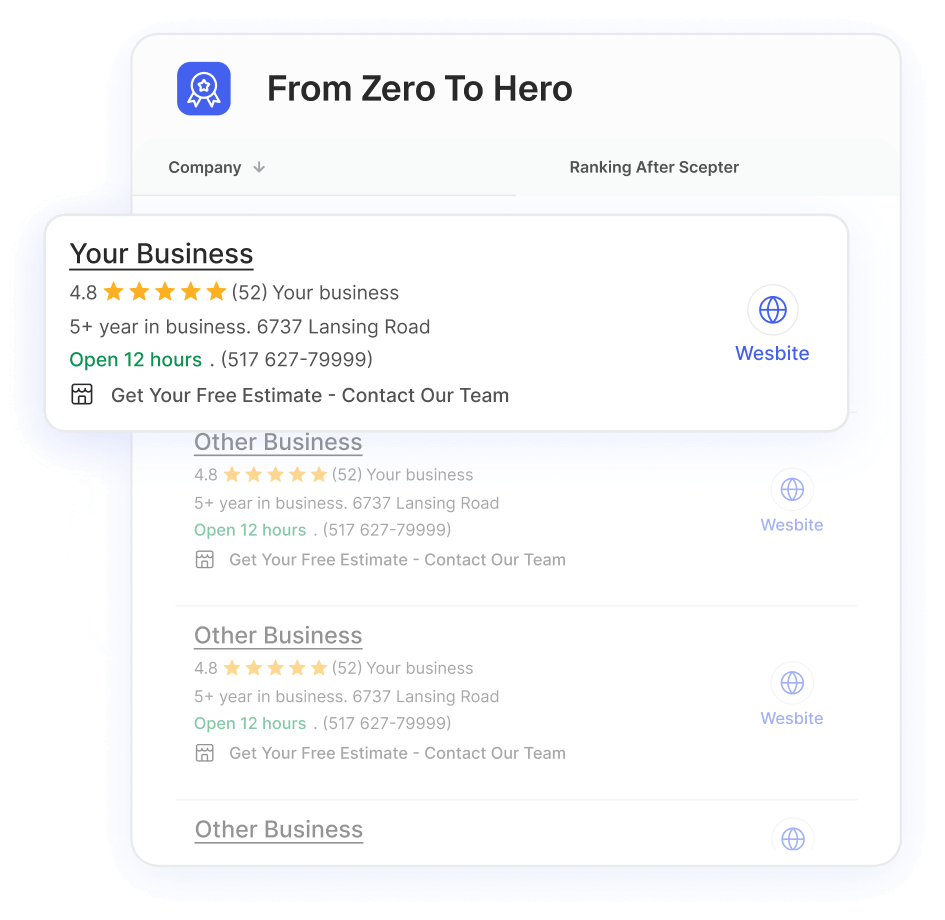
Our own keyword makes the point. Google Ads shows no monthly volume at all for “hartland mi digital marketing,” and two close variants show none either. In six months, Search Console logged 2 impressions for this page on “digital marketing hartland,” average position 2.0, zero clicks. Numbers that small aren't a target worth chasing. Google's local results weigh distance and relevance, so we'd map rankings on a grid stretching into neighboring towns, set service areas and categories to match real jobs, write pages naming the towns you cover, keep reviews arriving, then log which town each call came from.
Picture a homeowner asking ChatGPT, “Who does furnace tune-ups near Hartland, Michigan, and can come out this week?” Google often prints its own AI summary above the links too. Neither one invents a business out of thin air. They lean on listings whose name, phone and hours match everywhere, on reviews that mention actual jobs, and on websites that answer plain questions in plain sentences.
No one controls what an assistant recommends, and we don't promise a mention. Our part is cleaning up the sources those tools read: listings that match, reviews, and site pages that answer questions plainly. Run our no-cost AI Visibility Check, which comes out of our in-house audit engine, to see how you're described now and which gap to close first.
No case study here comes from Hartland, and we're not going to invent one. Two things we can point to: published Maps ranking grids for listings we manage, and a technical cleanup of our own site. Below is each one, and what it would mean for an owner in this town.


Problem
A Maps listing can look fine from the owner's driveway and still vanish a few miles out. Searching from your own phone can't show you the difference.
The Plan
We check rankings at points spread around each business, then publish a selection of grids, names hidden because most come from agencies that resell our SEO.
The Plan
Twenty-eight grids show the listing top three at every point tested. Names are withheld because partner agencies resell our SEO to most of them, and the set is a sample, not every account.


Problem
Our own site had collected years of broken images and tangled redirects, the kind of decay that piles up on any older website.
The Plan
Our own site went first. One 2026 audit pass found 167 images that wouldn't load and 141 faulty redirects, and we repaired every one. A Hartland site gets that same scan.
The Plan
Every one of those fixes is done, and we rescan to catch new ones. This page is part of our Michigan digital marketing service. If much of your work comes from Brighton, about 9 miles from Hartland, or Howell, about 11, those pages explain the approach from each town's side. For deeper ranking and page work, see our Michigan SEO service.


Problem
Picture a Hartland home-services company with good reviews and a decent site that gets few calls from the towns it most wants to work in. This is an example, not a client.
The Plan
We'd grid the listing across those towns, tighten categories and service areas, add pages naming each town, and point a small tracked ad at any town still out of reach.
The Plan
Running grids again each month would show whether that listing is reaching those towns or still stops near home.
You're a fit if your Hartland business pulls customers from beyond a community of 777 people: contractors, home service crews, and shops that draw from across Livingston County. It works best when you'd like one team on your listing, website, reviews and ads. If your only real gap is an unfinished Google listing, we'll tell you that and price only the listing work.

Why this matters. A business pulling customers from several towns has more places for a lead to slip away. Tracking shows where it happens, and one team can fix the leak instead of arguing about whose job it was.

Why this matters. We'd rather turn work down than take it on terms we can't meet. Nobody controls Google's rankings, so we won't promise them. A business whose customers mostly walk in from nearby may get more from a tidy Business Profile than from a full program, and we'll point that out if it's you.
Hartland owners weighing whether an agency earns its fee usually ask the same handful of things. We've answered them without promises. When the real answer hinges on your trade, your site or your service area, we name the variable. Anything missing? Send it through the button below.
Scope sets the price, and scope varies a lot from one business to the next. Cleaning up your Google listing and starting a review routine is a small job. Add new site pages, call tracking and managed ads, and the monthly fee grows. Ad spend goes to Google, separate from our management fee, and you choose that budget. An old or broken website means extra work at the start. Reach matters too. Hartland counted 777 residents in the 2020 census, so most owners here want customers from surrounding towns as well, and every added town means more pages to write and more grid points to check. Our free AI Visibility Check is the honest first step, and we quote from what it finds.
Nobody can give you an honest date, so we won't. Some work does tend to register sooner. Correcting a profile, such as a wrong primary category or blank service areas, often shows in the grids before fresh pages do, because Google has to crawl a new page and decide it deserves a spot. Ads start delivering once approved, though you pay for every click as long as they run. A site with crawl errors or slow pages holds back everything else until it's repaired. With 777 people in town, a Hartland owner's growth mostly sits in the neighboring towns, and that wider reach is usually the slower piece. Monthly grids show whether it's widening.
We put tracked numbers on your profile, website and ads, log each form with its source, and run ranking grids, then report on calls first. For a Hartland business working several towns, we add one more column: where the caller was, when the form, the ad's targeting or the conversation tells us. The report is short, covers what changed and what it produced, and names anything we'd cut.
Choose by where your customers start searching and where they can't find you yet. For a Hartland business we'd usually begin with the Google Business Profile and reviews, since local searches often end in the map pack. If grids show your listing fading in towns you want, service pages that name those towns come next. Ads suit a specific gap you can't wait on, less so as a permanent stand-in. Social posting and email can help, but we'd add them after the search basics are solid. The free AI Visibility Check is a quick first look.
Yes. A new Hartland business has one advantage: nothing to clean up. We'd set the Business Profile up correctly from the start, with the right categories and service areas, build a small site with pages for your main jobs and the towns you plan to serve, and get tracking on every number before the first call. Reviews are the slow part for any new listing, so we'd set up an easy way to ask each finished customer. With so few people living in the community itself, a new shop will probably lean on ads to reach other towns while the listing earns its place. We'd keep that spend small and tracked.
It tells you how Google and AI assistants describe your business right now. The check runs through the audit engine our team built and uses in real prospect audits. Since a Hartland company draws most buyers from nearby towns, look closely at whether your listings, reviews and site agree on what you do and where you work. Assistants lean on sources that line up. You get the one gap to fix first. Nobody can guarantee a ChatGPT mention, us included, and no sales call follows unless you want one.
For a business in a community this small, the pairing we'd suggest most often is the Business Profile working with search pages that reach the towns around you. Reviews back up both. Ads come in only where a town matters and neither is reaching it.
Our Hartland SEO page goes deeper on the search side. Nearby, we also cover digital marketing in Highland, about 6 miles from Hartland, and marketing for Milford businesses, about 9 miles away.

The profile catches searches near your address. Pages built around your services and the towns you serve catch the ones that start further out, where much of a Hartland business's work tends to come from.

A small campaign limited to one or two towns can bring in calls while the listing and pages work on reaching them.

Someone who's never been to Hartland judges you mostly on what past customers wrote. Recent reviews that mention the work help that reader, and they count toward the listing's prominence too.
Too Busy to Dive In?Prefer to look before you talk? Paste your web address into our no-cost AI Visibility Check. You'll see what Google and chat assistants currently understand about your business, and which gap we'd tackle first, whether that's an incomplete Google listing, service pages with too little on them, or reviews that stopped coming in.